Profile view of a bearded man wearing a black baseball cap and a dark gray T-shirt against a plain light background.

Why your AC compressor won't kick on in Wyoming

Step 1 of 3: Equipment

Why won't my AC compressor turn on in this heat?

Ninety-five degrees outside and the air handler is blowing, but the compressor outside sits quiet. You can hear the fan but not the low hum that means it's actually cooling. In Wyoming's dry heat that lag feels dangerous fast, and you want to know whether this is something simple or a sign the unit is done for.

Usually a failed capacitor or a safety switch protecting the compressor

Most of the time the compressor itself is fine. A capacitor gives it the jolt it needs to start, and once that part weakens the compressor just hums or stays silent while the fan keeps running. The other common cause is a safety switch doing its job: if the system ran low on refrigerant or the outdoor coil is caked with dust, the control board cuts power to the compressor rather than let it overheat. Either way the system needs a licensed technician to test it and find which one is happening, since running it repeatedly while the compressor won't start can burn it out for good, and a dry Wyoming summer gives you little room to wait on that.

An outdoor air conditioner condenser unit on a concrete pad beside a house with beige horizontal siding and a stone-veneer base, with refrigerant lines running to a gray wall-mounted electrical box, surrounded by dark mulch, a flowering shrub and an evergreen on the left.

Compressor cycling normally

Walk up to the unit and you hear a steady hum under the fan noise. That's the compressor running, moving refrigerant, actually pulling heat out of the house. It cycles off when the thermostat's satisfied, then back on later. Air coming from the vents stays cold the whole time it runs.

An outdoor air conditioning condenser unit on a concrete pad beside a house with light vinyl siding, an electrical disconnect box and conduit on the wall, bare shrubs and mulch to the right, and a concrete walkway in the foreground.

Compressor staying silent

The fan spins on top but there's no hum underneath it. Inside, the air handler blows but the air isn't cold. Check the breaker and the disconnect box on the wall first. If those are fine and it still won't kick on, the compressor itself or its capacitor needs a look from someone licensed to open that panel.

Call for Repair or Keep Watching

Call for repair

  • The compressor stays silent through a 95 degree afternoon and the house keeps climbing past the thermostat setting.
  • The outdoor fan runs but you never hear the hum that means refrigerant is actually moving.
  • Breakers trip repeatedly when you reset them, which points to a short or a failing capacitor rather than a one-time glitch.
  • The unit hums for a second then clicks off, a sign the capacitor is weak or the compressor windings are drawing too much to start.
  • A local contractor who services this equipment every summer can usually tell within minutes whether it's the capacitor, the contactor, or the compressor itself.
  • Waiting through another hot stretch without cooling risks the compressor further if the fault is electrical.

Keep watching it

  • The compressor cycles on and off normally, just less often because the thermostat is set a few degrees higher than usual.
  • The outdoor unit hums steadily and the house temperature tracks close to the setting, just slower on the hottest days.
  • A single tripped breaker on an unusually hot day, with everything running fine after reset, isn't automatically a sign of a bigger problem.
  • The compressor delays a few seconds before starting, which is normal timing built into most systems to protect the motor.
  • Dust or debris around the outdoor unit can muffle the sound without meaning anything is actually wrong with the compressor.
  • If the house is holding its temperature and the unit cycles on its own, there's nothing here that needs a call yet.
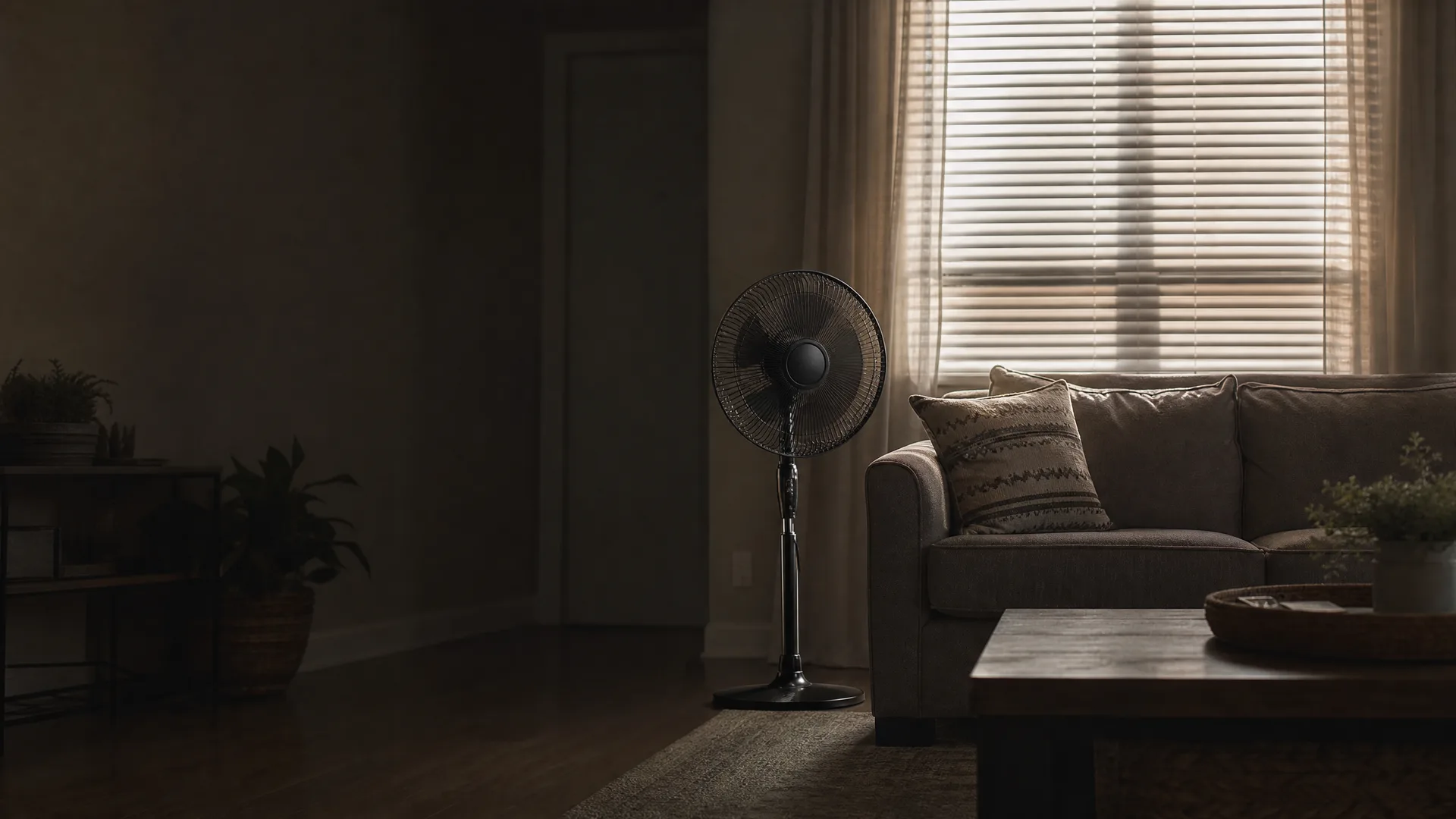
A dimly lit living room with a black pedestal fan on a wood floor beside a gray sofa with a patterned pillow, a wooden coffee table in the foreground, potted plants at left, and a curtained window with blinds behind.

By three in the afternoon the blinds are down and the fan by the couch is doing what it can. Outside it's ninety-five and dry, the kind of July heat Wyoming gets without the humidity to show for it. You've gone out twice to check on the unit, standing close enough to hear past the fan, waiting for that low hum underneath it. Nothing. The thermostat reads four degrees over where you set it. You've already thought about who to call, whether you'd need to explain it twice, get a second opinion, wait on a callback. Right now you just want the house to stop climbing.

Skip calling around

Your request stays with one local pro.

You're not committing to anything by asking.

What actually stops the compressor

A compressor needs three things to start: power reaching it, a signal from the thermostat telling it to run, and a capacitor strong enough to push it through that first second of startup. Lose any one and the fan outside still spins, because the fan motor runs on its own circuit. A tripped breaker cuts power to the compressor only. A bad capacitor lets the compressor hum and stop instead of catching. A contactor with pitted contacts might close the circuit halfway, enough for the fan but not enough to carry the compressor's higher load.

Why the heat makes it worse

Dry heat in the nineties pushes the compressor to run long stretches with little rest, since the dry air doesn't slow down how fast the house gains heat the way humidity would elsewhere. A capacitor that was weak but still working in May can give out entirely by August, when the compressor draws more current just to keep up. Pressures inside the system run higher too, which is why a failing part tends to show itself on the hottest afternoon rather than a mild one. By the time the compressor won't start at all, it's usually been struggling for a while.

A man with grey hair and stubble in a dark sweater sits on a grey sofa indoors, looking off to the side, with a potted plant and a sunlit window behind him.
A man with gray hair, a beard and glasses, wearing a dark green sweater, sits on a gray sofa in a sunlit living room with a potted plant, table lamp and wooden sideboard behind him.
A middle-aged man with graying hair and a short beard sits on a blue sofa in a living room, looking toward a window, with a bookshelf, lamp and framed picture in the background.
A man with graying curly hair and a dark green sweater sits on a gray sofa in a sunlit living room, looking off to the side, with a framed picture, shelving, an armchair and a window with sheer curtains behind him.

Compressor won't start

A contractor who works on these units every summer can test the capacitor, the contactor and the wiring in one visit instead of you guessing which part failed.

Skip calling around

Finding someone to look at it

One licensed, local contractor who already knows what fails in this heat, instead of you calling around and explaining the same problem more than once.

Skip calling around

Power costs 13.37 cents per kilowatt-hour statewide

At 13.37 cents a kilowatt-hour, running the compressor costs you less here than in most states. That's worth knowing before you start cutting the AC off early to save money. A dead compressor isn't saving you anything if the real problem is a failed capacitor or contactor sitting unfixed.

EIA-861 2025 statewide residential average

You call one contractor who works on compressors all summer, send one description of what the unit is doing, and wait for one visit instead of several bids to sort through.

You spend an afternoon calling shops, repeating the same details about the fan running but no hum, and end up juggling callbacks from companies you know nothing about.

An outdoor air conditioner condenser unit on a concrete pad beside a house with light horizontal lap siding, with an electrical disconnect box and conduit on the wall behind it.
Before you get your air conditioner repair
An outdoor air conditioning condenser unit on a concrete pad beside a house with white horizontal lap siding, with an electrical disconnect box and insulated refrigerant line on the wall and a shrub over mulch to the right.
After you get your air conditioner repair

Waiting it out yourself

You keep flipping the breaker and resetting the thermostat, hoping the compressor catches on the next try. Some afternoons it seems to help for an hour, then the house climbs past the setting again and you're back outside listening for that hum. Meanwhile the house sits at ninety plus with no fix underway, and if the problem is a failed capacitor or a stuck contactor, nothing about waiting changes that. You lose the afternoon and the compressor still doesn't run.

Getting a contractor out to look

A contractor who works on these units every summer checks the capacitor, the contactor and the wiring in one visit and tells you which one failed. You're not guessing between three possible causes or hoping the next reset works. One local contractor, one visit, one answer about what's wrong with your unit instead of you standing by the compressor trying to diagnose it from the sound it isn't making.

A woman with shoulder-length brown hair wearing a beige knit cardigan sits in a gray upholstered armchair near a window, looking off to the side with a slight smile, with bookshelves blurred in the background.
A woman with her hair in a bun holds a sleeping young child against her chest, both wrapped in a textured beige knit blanket on a sofa in a dimly lit room with a lamp, framed picture, and bookshelf behind them.
A single-story house with gray vinyl siding, dark shingled gable roofs, and white-trimmed windows, set behind a partly dry green lawn under a clear blue sky.

Summer air in Wyoming runs dry, but it's not dry everywhere the same way. Averaged across homes here, the dew point sits around 42°F through June, July and August, according to NOAA climate data. That's low enough that sweat evaporates fast and the heat feels manageable even at 95 degrees. It also means the compressor isn't fighting moisture the way units do in wetter states. But dry heat still pushes hard on the electrical side, the start capacitor, the contactor, the wiring. When the compressor won't kick on here, it's rarely humidity stressing the system. It's heat alone, working on parts that have to fire every single cycle.

NASA POWER T2MDEW county cells weighted by homes

A compressor that won't start needs power, a thermostat signal, and a capacitor able to push it through that first second, and when one of those fails the fan outside keeps spinning while the house keeps climbing. That's the whole answer. Finding out which one failed is the part that takes someone who's inside these units all summer, the kind of contractor who can look at a tripped breaker or a silent compressor and already have a short list of what usually causes it in this heat. You call one licensed contractor local to Wyoming, not three or four, and you explain what the unit's doing once. No guessing which part to replace first, no separate trips to rule things out one at a time. The heat outside isn't going to let up, and a compressor that stays quiet through a 95 degree afternoon isn't something to keep testing with the breaker. Get it looked at by someone who already knows what to check first.

Dark standing-seam metal roofs of wood-sided buildings in the foreground, with a single spruce tree, grassy hills, conifer forest, and snow-streaked mountain peaks behind.

No phone calls to make

Fill out one form

No charge to send it. You decide if you hire them.

A dead compressor on a hot afternoon doesn't fix itself by evening. One visit from someone who already knows what fails in these units tells you whether it's the capacitor, the contactor, or the wiring, so the house stops climbing past the setting you asked for.