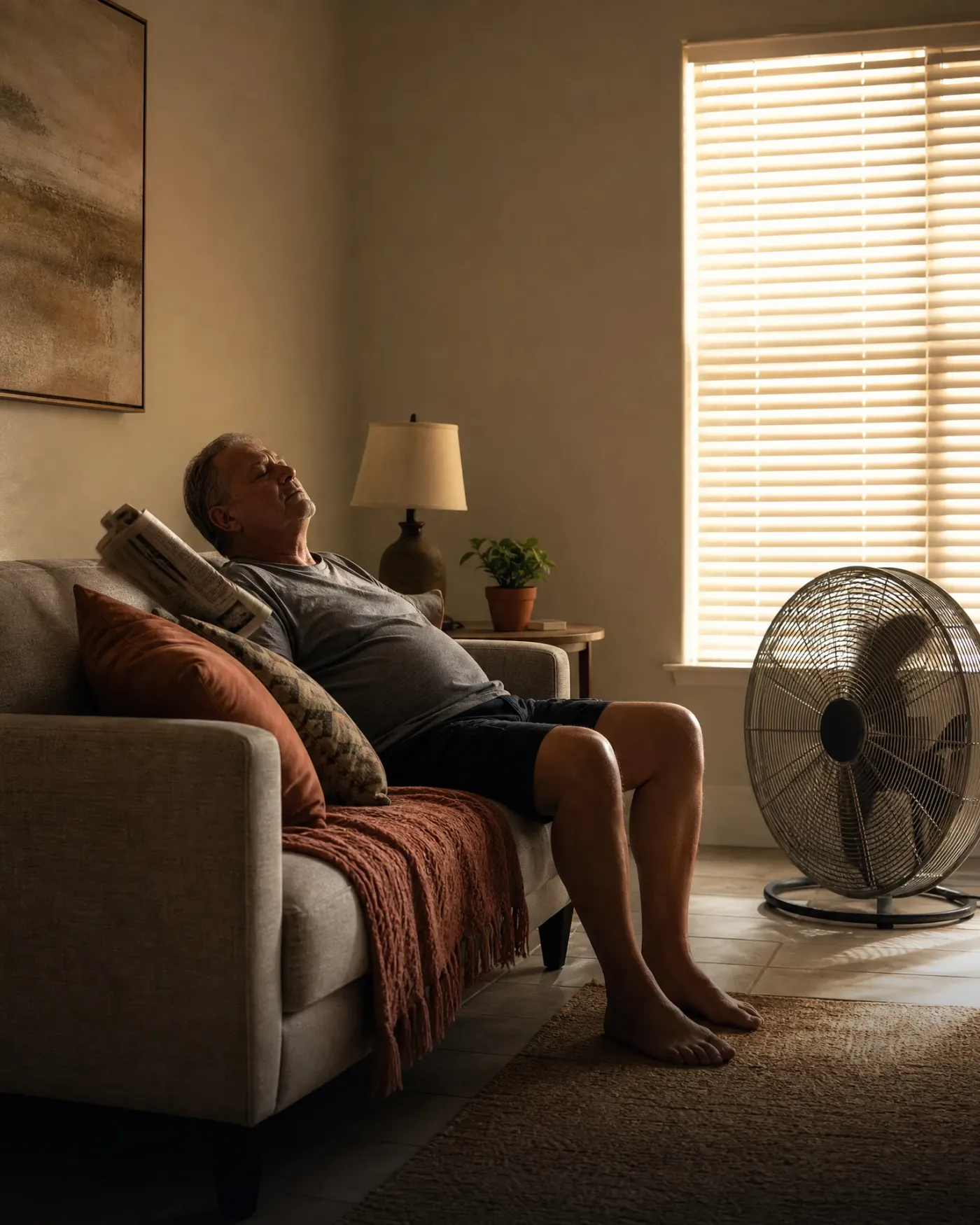
Signs of a bad AC capacitor in Wyoming
A bad capacitor usually shows up as an AC that hums but won't start, or a fan that spins slow and labors to get going. Sometimes the outdoor unit clicks and shuts off on its own. The capacitor holds the charge that kicks the compressor and fan motor into motion, and heat wears it down faster than almost anything else. In Wyoming, where the compressor runs hard through long hot, dry summers, that strain adds up year after year. Once it weakens, the motor pulls harder to start, runs hotter, and can trip the breaker or fail outright on the next warm afternoon. Catching it early is the difference between a quick fix and a compressor that burns out from the strain.

The capacitor stores a charge to start the motors
A weak capacitor delays or weakens that starting charge
The compressor or fan motor strains to spin up
Strain shows up as humming, clicking, or slow spinning


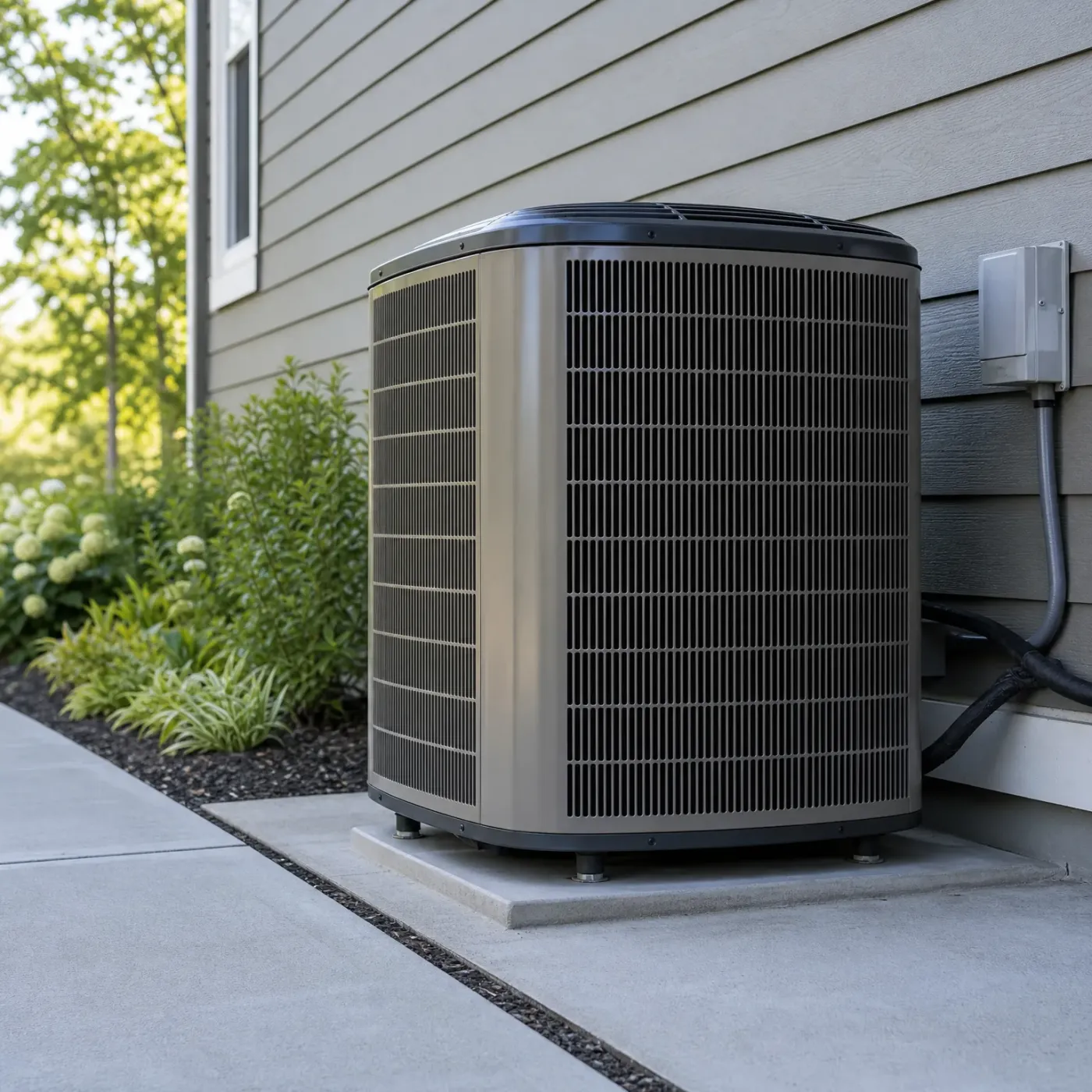
You'll likely notice it first on a hot afternoon, the time your AC works hardest against the dry heat outside. The outdoor unit hesitates, humming a few seconds longer than it used to before the fan catches. Some days it may shut off on its own and sit quiet until it tries again. That hesitation isn't harmless. Every time the compressor strains to start without a full charge, it runs hotter than it's built to, and that heat wears on the motor a little more each time. Left alone, a capacitor in that state tends to get worse, not better, and the unit it's feeding often picks the hottest day of the week to finally quit. None of this is about your power bill. Power is cheap here, and a struggling unit cycling on and off doesn't change that much. What it changes is how long the unit lasts and whether it's still running when you need it most, on the kind of afternoon Wyoming gives you plenty of each summer.
What a Failing Capacitor Costs You
- A capacitor that's failing will often make your outdoor unit sit there humming for several seconds before the fan finally catches and spins up.
- If the unit shuts off on its own mid-afternoon, when it's working hardest against the heat, a dying capacitor is a common reason why.
- A compressor that keeps straining to start without enough charge runs hotter than it should, and that wears down the motor over time.
- Left alone, a weak capacitor usually doesn't fix itself. It gets weaker until the unit won't start at all, often on the hottest day of the week.
- Dry Wyoming heat means your AC is already working against low humidity and high afternoon temperatures, so a struggling capacitor gets pushed harder here than it would in a milder spot.
- A unit that keeps stalling and restarting draws more power each time it tries, even though power itself is cheap here.




Hand off the air conditioner problem
Only one pro gets your request, so you hear from one company.
After this form, you can stop searching for an air conditioner pro.
There's no charge for the request.
What are you noticing when your AC kicks on
Walk out by the unit when it tries to start. You might hear a hum that goes on too long before the fan catches, or the fan turning slow like it's pushing against something. Some units click a few times and give up, going quiet instead of running. Inside, you'd notice the air isn't as cold as it should be, or the house takes longer to cool down on a hot afternoon. If the capacitor finally fails outright, the compressor won't start at all, and in a Wyoming summer that means the house holds heat all day with no relief until someone gets out to look at it.

Why heat makes it worse
A capacitor loses strength over time, and heat speeds that along. The metal inside breaks down faster as it runs hotter, and an outdoor unit sitting in direct sun in July or August is working through the hottest part of the day already. That's why a marginal capacitor tends to fail on the afternoons you need the AC most, not in the cooler morning hours when the compressor has an easier time starting.

What a multimeter shows
A capacitor carries a microfarad rating printed right on its case, and a technician checking one reads that number against what the capacitor actually tests at with a meter. Most manufacturers allow the reading to fall within about 6 percent of the rating before calling it weak. Once it drops further than that, the motor it feeds isn't getting enough of a push to start reliably, even if the unit still runs some of the time.
Power costs 13.37 cents per kilowatt-hour statewide
At 13.37 cents per kilowatt-hour, running your AC in Wyoming doesn't hit the bill as hard as it does elsewhere. That's good reason not to let a failing capacitor push your system into working harder than it should, straining the compressor on hot afternoons for no gain.
EIA-861 2025 statewide residential average
What Your AC Is Telling You
- A hum that lasts too long before the fan catches, or a fan that spins slow, points to a weak capacitor.
- An outdoor unit that clicks and shuts off on hot afternoons is straining to start without enough charge.
- The capacitor itself doesn't show wear from outside, so the way the unit starts up is the real signal.
- A licensed contractor local to Wyoming who works on these units every summer knows which ones tend to fail first.
- Matching you to one contractor instead of several means no juggling calls to find out who can get to it.
- Catching a weak capacitor early keeps the compressor from laboring against the heat every time the unit kicks on.
A slow start, a long hum, a unit that clicks off on its own in the afternoon heat. That's a weak capacitor, and it won't get stronger on its own. The part itself won't show you anything if you look at it, no corrosion or crack to point to. The only evidence you get is how the unit behaves when it tries to start, so what you hear out there matters more than what you'd see if you pulled the panel off yourself.
Summers in Wyoming are dry, but they're hot enough that an outdoor unit sitting in full sun by early afternoon is already working against the heat before the capacitor problem adds to the load. Every time it struggles to start, the compressor takes the strain instead. That's what turns a part that costs little into a compressor replacement if it goes long enough without attention.
Someone who works on these units every summer in Wyoming has heard that hesitation before and knows what usually causes it. That's who gets matched to your call, one contractor, local, licensed to do the work, not a handful of companies competing for the job. You explain what you're hearing from the unit, and they already know roughly where to look first.
The fix itself is small next to what it prevents. A capacitor that's caught early is a straightforward swap. One that's ignored tends to take the compressor down with it.
